
Syndicated post from InmanNews.
Source link
Construction costs surged early in 2026, driven by rising energy prices, with analysts warning that oil volatility tied to Middle East tensions could push costs even higher.
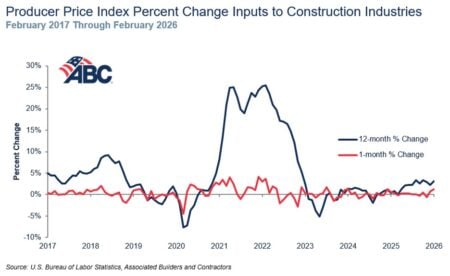
Construction costs are climbing fast, and the latest data suggests more volatility could be on the way. Prices for key construction inputs surged at a “staggering” 12.6 percent annualized rate in the first two months of 2026, according to an analysis released by Associated Builders and Contractors (ABC).
The increase was driven in part by energy costs. Input prices for nonresidential construction rose 1.3 percent month over month in February and were up 3.7 percent compared to the same time last year. But those figures may understate what’s ahead.
The report does not yet account for recent economic shifts, including oil price volatility tied to escalating tensions in the Middle East, a factor that could push construction costs even higher in the coming months.
“Notably, this data does not reflect the precipitous increase in oil prices, which are near $100/barrel as of this morning, caused by the conflict in Iran,” ABC chief economist Anirban Basu said in a statement. “That will put upward pressure on construction materials prices directly by raising diesel prices and, indirectly, by raising the cost of shipping other inputs.”
The month-over-month increases were largely driven by surging energy costs, with prices climbing across key categories including natural gas, unprocessed energy materials and crude petroleum.
Energy costs were already moving higher before recent geopolitical tensions intensified. Natural gas prices jumped 10.9 percent month over month in February, while unprocessed energy materials rose 6 percent and crude petroleum increased 4.7 percent. Other key construction materials also posted gains, pointing to broad-based cost increases across the sector.
Rising costs are already beginning to influence project decisions, according to an analysis from the Associated General Contractors of America, which said higher input prices are starting to factor into how developers and contractors evaluate new projects.
“There is a limit to how many price increases the market can absorb before owners put projects on hold,” Jeffrey D. Shoaf, CEO of the Associated General Contractors of America, said in a statement. “Reducing uncertainty around tariffs and stabilizing supply chains would go a long way toward helping contractors keep projects moving forward.”
February’s increase in nonresidential construction input prices followed a January spike tied to tariff-driven cost increases for materials such as wire, cable, and industrial controls equipment, as well as copper and steel.
At the time, ABC said those gains were “not particularly concerning,” noting that most of the year’s price increases had already occurred earlier in 2025.
But price pressures are beginning to build again across the construction sector. Annual increases for overall construction inputs — spanning both residential and nonresidential — have climbed from 2.3 percent in January to 3.1 percent year over year.
While the latest uptick alone may not raise alarms, analysts say the cumulative impact of rising costs is starting to draw concern.
“Fewer than 1 in 4 contractors expect their profit margins to shrink over the next six months, according to ABC’s Construction Confidence Index,” Basu said. “Those expectations will bear close monitoring if input prices continue their rapid ascent.”

