
Syndicated post from InmanNews.
Source link
Quick Read
- Federal Reserve Governor Lisa Cook says tariffs are temporarily raising inflation above the Fed’s 2% target, but underlying inflation is trending lower and expected to normalize once tariff effects subside.
- Cook remains undecided on a December interest rate cut, expressing concern about the labor market’s potential volatility amid rising inflation and unemployment.
- Treasury Secretary Scott Bessent warned the housing market is in a recession, blaming the Fed for slower-than-needed interest rate reductions, while Fed Chair Powell noted divided opinions on further rate changes.
- Cook is embroiled in political conflict after President Trump’s attempt to remove her, amid disputed criminal referrals related to mortgage fraud by FHFA head Bill Pulte, with legal challenges ongoing.
An AI tool created this summary, which was based on the text of the article and checked by an editor.
In her first public speech since President Trump’s attempt to remove her, the economist said she expects a “one-time increase” in prices, with inflation trending back down toward the 2 percent target once “the effects are behind us.”
Tariffs are fueling higher prices and moving inflation farther away from the Federal Reserve’s 2 percent goal, but the impacts should be temporary, embattled Federal Reserve Governor Lisa Cook said Monday.
In her first public speech since President Trump’s Aug. 25 attempt to remove her from the Federal Reserve Board, Cook said that based on available data, the Fed’s preferred gauge of inflation rose to 2.8 percent in September, “significantly above our 2 percent target.”
While the full impact of tariffs on prices remains to be felt, they should “in theory, should represent a one-time increase,” she said.
Excluding the impact of tariffs, core inflation is about 1/2 a percentage point lower, she said, “suggesting that underlying inflation has continued to make progress toward target.”
“My assessment is that inflation is on track to continue on its trend toward our target of 2 percent once the tariff effects are behind us,” Cook said. “The big caveat is that tariff effects must prove not to be persistent and that monetary policy remains appropriately focused on achieving that goal.”
Cook, who voted with most of her colleagues to cut short-term interest rates in September and October, said she hasn’t made up her mind about a December rate cut, but said she is “worried about the labor market” because it “can turn very quickly.”
Treasury Secretary Scott Bessent warned on Sunday that the housing market is in a recession, and blamed the Federal Reserve for not lowering interest rates faster.
Federal Reserve Chair Jerome Powell said at an Oct. 29 press conference that Fed policymakers have differing views on whether another rate will be needed in December with both unemployment and inflation trending up. That warning has put upward pressure on mortgage rates, which are determined by investor demand for mortgage-backed securities.
Inflation trending up
The Federal Reserve’s preferred gauge of inflation, the Personal Consumption Expenditures (PCE) index, has been climbing since April, when the Trump administration announced reciprocal tariffs on most U.S. trading partners.
The Supreme Court will hear arguments Wednesday on the legality of tariffs imposed by the Trump administration under the authority of the International Emergency Economic Powers Act.
Inflation data for September was due to be released on Oct. 31, but some data needed to compile the index is missing due to the ongoing government shutdown that began on Oct. 1.
Trump and Bill Pulte have pressured Powell to lower interest rates. Although Powell’s term as Fed Chair expires in May, there’s speculation that if the Trump administration succeeds in removing Cook, it would then have the ability to oust Federal Reserve presidents that disagree with it in February.
Cook is one of three perceived enemies of the Trump administration who have been the subjects of criminal referrals alleging suspected mortgage fraud to the Department of Justice by Pulte, the head of Fannie Mae and Freddie Mac’s federal regulator, the Federal Housing Finance Agency (FHFA).
All deny wrongdoing, and the Supreme Court has let lower court rulings stand that allow Cook to continue to serve on the Federal Reserve Board pending a hearing early next year.
Cook said Monday she could not discuss the president’s attempts to remove her from the board.
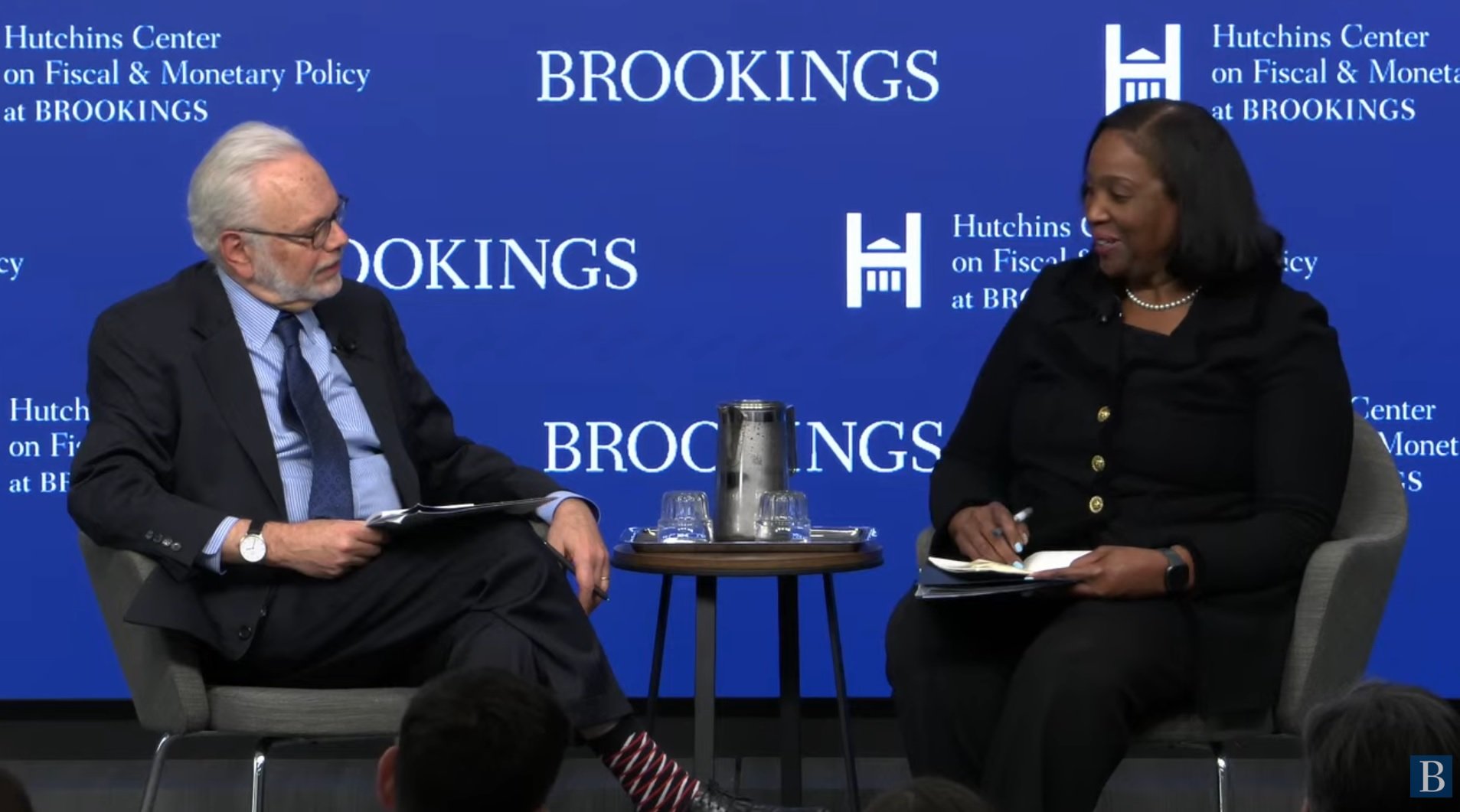
“There are no people in this room and in this building who have reached out and been supportive in many ways,” Cook told an audience at The Brookings Institution in Washington, D.C. “I am beyond grateful for this support, and multiple briefs filed by my very skilled legal team questions related to this case and its potential impact on the Federal Reserve have been addressed at length. Because the case is ongoing, it would be inappropriate for me to comment further today.”
New York Attorney General Letitia James pleaded not guilty to federal bank fraud charges on Oct. 24, and her attorneys have moved to dismiss the case, saying she’s a victim of vindictive prosecution.
The Wall Street Journal‘s editorial board has condemned Pulte’s referral of Cook as “an ominous turn in political lawfare.”
In a Nov. 1 blog post in the Yale Journal on Regulation, former Consumer Financial Protection Bureau attorney Dominic Powell questioned the FHFA’s legal authority to make criminal referrals.
Pulte’s criminal referral of James references the Federal Housing Enterprises Financial Safety and Soundness Act of 1992. That law allows the FHFA to require “reports of financial condition and operations” from Fannie Mae and Freddie Mac, but does grant the authority to make criminal referrals, Powell noted.
But as Fannie Mae and Freddie Mac’s federal regulator, the FHFA “has no generalized crime-fighting or anti-fraud authority,” Powell wrote. “It does not even have an express authority to make criminal referrals besides those granted to the FHFA’s Inspector General under the Inspector General Act of 1978.”
The FHFA did not respond to a request from Inman for comment.
Get Inman’s Mortgage Brief Newsletter delivered right to your inbox. A weekly roundup of all the biggest news in the world of mortgages and closings delivered every Wednesday. Click here to subscribe.

