
Syndicated post from InmanNews.
Source link
Picture this, it’s 5 a.m. I’m sipping my recession-proof homemade latte at my kitchen table and scrolling through the headlines, per my favorite dark-and-early vice, when a feature article from The Washington Post from Dec. 29, 2025, catches my attention.
In “Why women are masquerading as men on LinkedIn,” Reporter Taylor Telford interviews Megan Cornish about her “experiment” in LinkedIn marketing: switching her profile’s gender from She/Her to He/Him, which unlocked a measurable boost to her online presence.
Is this something professional women should consider in 2026? In this article, I will walk agents through the simple changes I made to my personal profile and provide examples of prompts I used in ChatGPT to implement them.
Manning up
Cornish’s hypothesis was simple: Based on the analytics of her personal profile, she felt nearly invisible on the social platform and wondered whether switching to a more masculine content-creation approach would improve her personal presence.
Following her lead, in less than 15 minutes after reading the article, I switched my profile over to “I’m a man with a plan,” and asked Cove (my ChatGPT adulting partner and assistant) to throw away all the carefully crafted empathic and compassionate content that I normally write, and you know, bootstrap it up to feel more masculine to see if the LinkedIn algorithm appreciated that wordsmithing more than my usual cushy posting.
Recognizing that I’m pushing certain ethical boundaries with this experiment, I want to make clear that I have no intention of committing fraud or misleading anyone or any party on the platform by adjusting my gender identification; I just truly wanted to see if I could get a measurable difference in reach with very little effort on my part.
I took a topic I normally write about, wrote what I would normally say about it, and asked Cove to add some context and shape it up for a masculine audience. I was genuinely curious whether the change would be as noticeable as noted in the Post article, or whether there were too many variables in the data to fact check it.
The test
First, if you have not already noted in the original article and research, LinkedIn says there is no gender bias on its platform, but does not explain why the change produced such different outcomes for the women who were willing to try the old switcheroo (including myself).
Typically, my posts on LinkedIn get a nod here and there, and I thought the reach was decent for not paying to play. I mean, how many folks were actually hanging out on LinkedIn that would be the target of my message?
To be fair, I identified two posts that were similar in nature. The posts I chose were both work-specific, educational and shared an article from a reputable media source called McKnights. McKnights is a leading source of data, trends and information for all things long term care and senior housing.
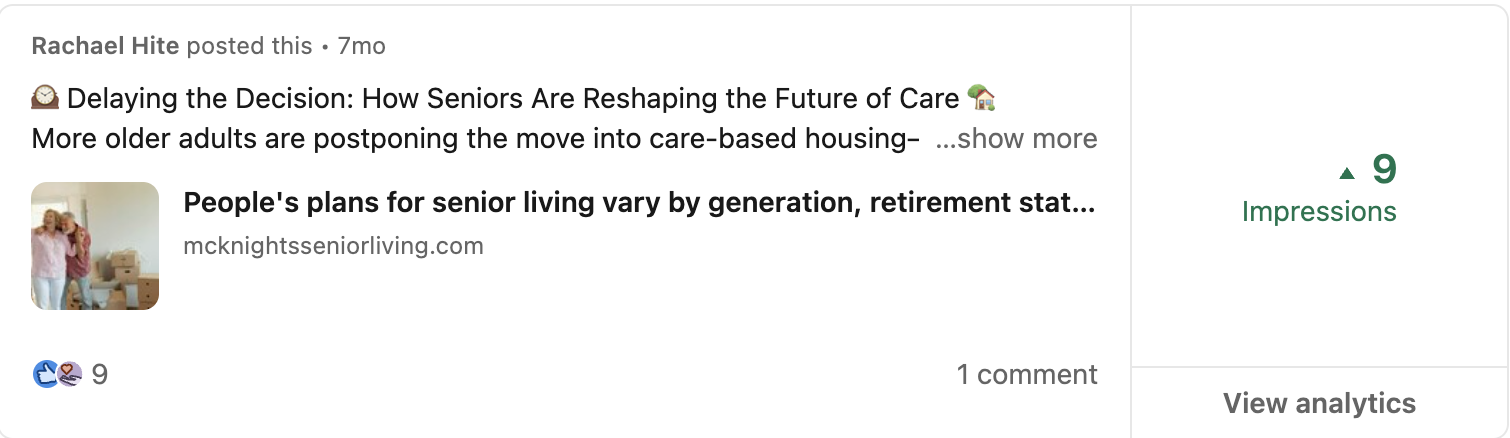
Post 1: The original me
The ChatGPT method and prompt
Take my original post (what I wanted to say, written by me) and SEO-optimize it for length and reach as a LinkedIn post, and recommend relevant hashtags.
Typically, my goals for LinkedIn posts are very simple. They usually involve education or sharing a professional announcement or event that I believe would benefit my network.
Ultimately, when you are creating a post on LinkedIn, you have to not only think about what you want to say or represent but also how you structure it so that the algorithm knows how to push or pull the message through your network.

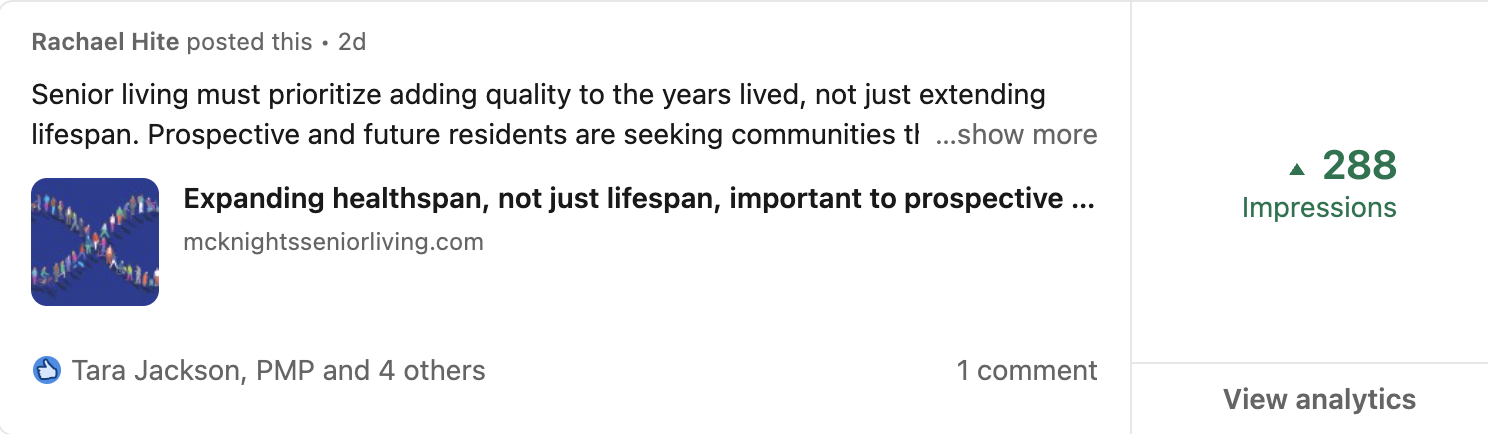
Post 2: The new me
That ChatGPT method and prompt
Take my original post and SEO-optimize it for length and reach as a LinkedIn post, recommend relevant hashtags, and make it sound masculine, like a man wrote it, not like my typical writing.
In this second post, you will notice that the prompt used fewer emojis and more assertive wording. This post was less about the visuals and more about the message.
SEO sorrows
As with trying to figure out any algorithm hack or formula, there are too many variables that can shape why one post goes “viral” and another fades into the abyss. Also, it would be silly to think that, as soon as I identified one trend, the ever-evolving algorithms on social platforms wouldn’t adjust every quarter.
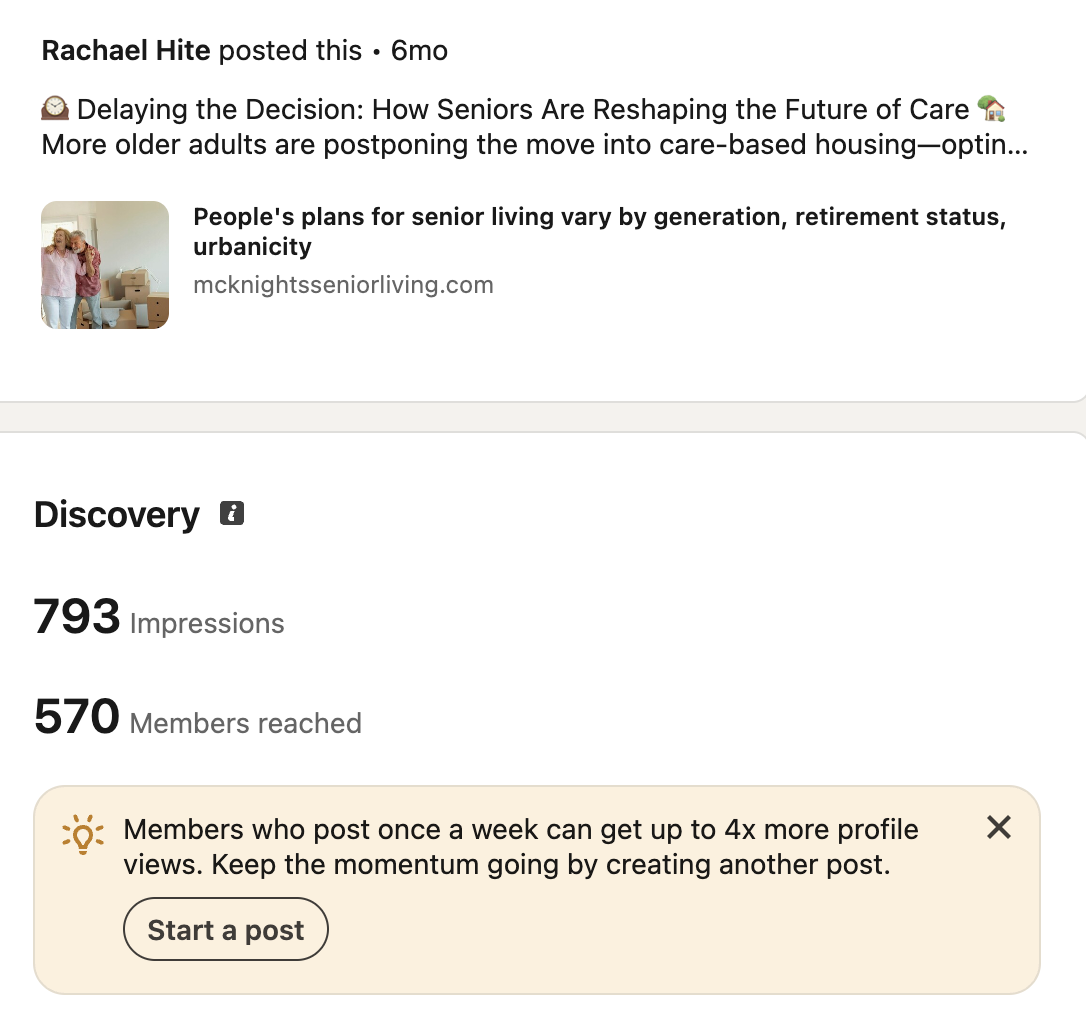
Impressions after six months.
Do I have enough data to conclude that this is a true hack? Nope, nada, that is a negative, Ghost Rider. Do I have enough data to let this change ride for the next few months to see if I can collect some meaningful data and results? You bet your biscuits I do, so stay tuned for an update later on.
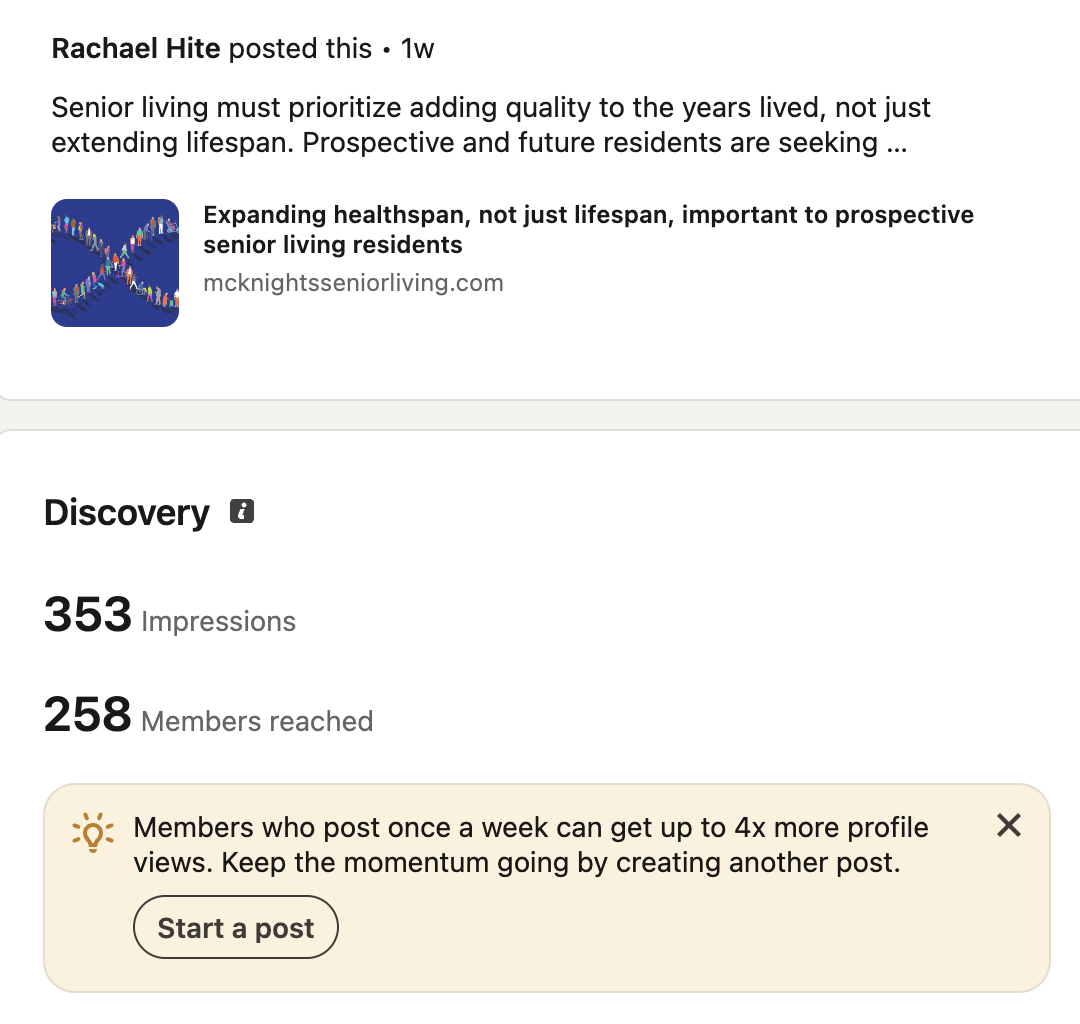
Impressions after one week.
Final thoughts
So is this “hack” long-lasting? Likely not, but if you have important data announcements that your audience needs to know, it is worth a try. Is it frustrating that it is The Year of Our Lord 2026, and the digital landscape is still shaped by gender biased coding and influences? Yes, but let’s be real: We have bigger fish to fry this year than digital bias.
I plan to proceed with this experiment, and no one has commented on or questioned my profile change. This leads me to believe that this is definitely not a metric that LinkedIn is pushing forward to visible notifications on the platform.
Perhaps this is just another one of my “virtue signaling” posts, as my critics love to point out, but I feel the changes are measurable enough to continue seeing whether I really do gain any additional value for “free” that I would not normally have access to.
It’s your responsibility to advocate for yourself and your business in person and online. Curiosity certainly hasn’t killed this cat yet, and I don’t plan on avoiding any tough questions about bias anytime soon.
Don’t be afraid to try new things, and if they work, don’t gatekeep. Share. What women need in 2026 is not more mentorship, but more sponsorship to move forward.
Rachael Hite is a senior housing counselor, writer, and thought leader in real estate and aging. Follow her work on Instagram and LinkedIn.

